Record the bottle, not just the colour name
Use a separate entry for each distinct product. Include its brand, range, name, and reference code when one is printed on the label. Two similar names do not necessarily mean the same paint, especially across older and newer ranges.
Give each bottle a simple location: drawer two, blue rack, or active project tray. If you own duplicates, record that in a way you can understand before buying another bottle. A catalogue without a physical location solves only half the problem.
Keep your first inventory small
| Field | Why it helps |
|---|---|
| Brand and range | Separates different product families. |
| Name and code | Helps identify the bottle when following a recipe. |
| Location | Makes the paint easy to find. |
| Condition note | Records whether you need to check or replace it. |
| Recipe or swatch note | Preserves what worked on an actual miniature. |
You do not need to measure how many millilitres remain in every bottle. If an estimate does not change what you do next, it may not be worth maintaining.
Make a dried-swatch reference
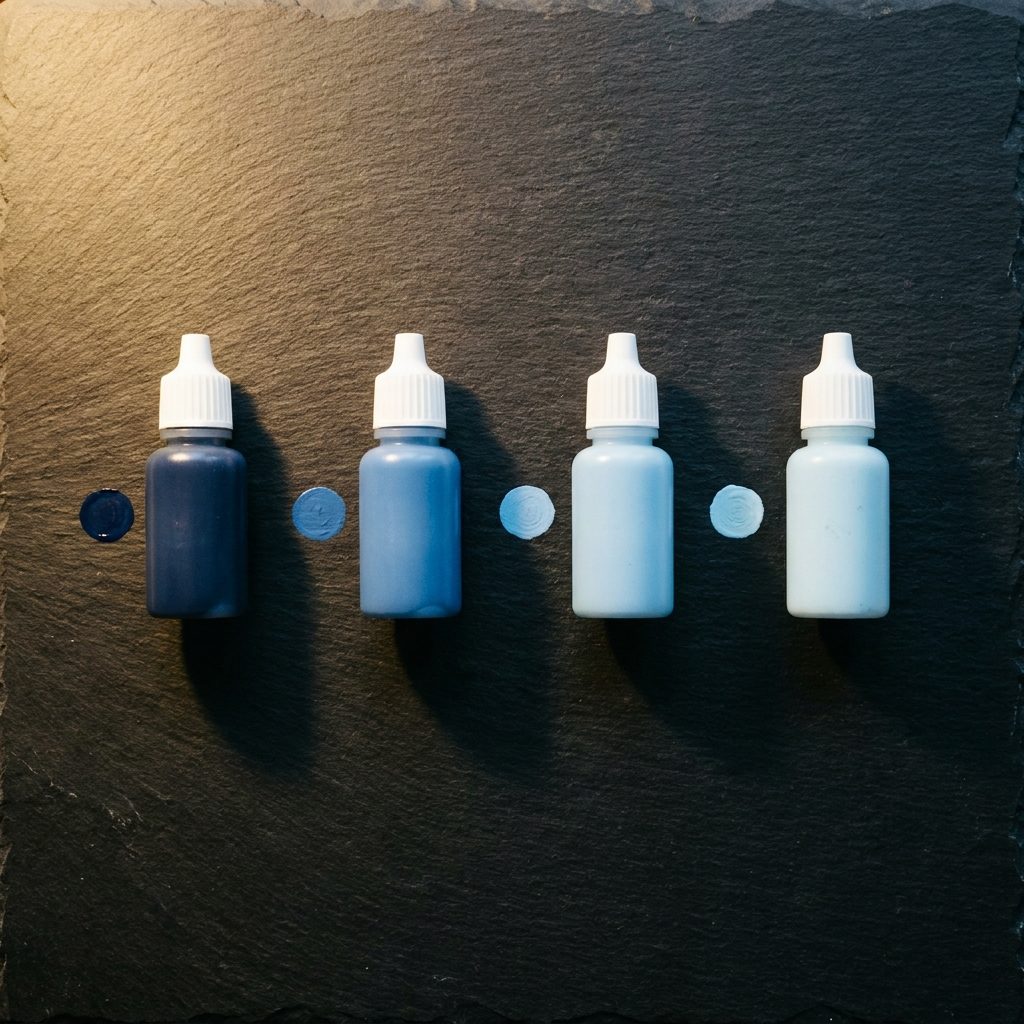
Use the same primed test surface for paints you want to compare. Label each sample before painting, let it dry, and note the primer and coat count. Keep a photograph for convenience, but retain the physical swatch when colour comparison matters.
Vallejo’s published colour chart cautions that reproduced colours are approximate. Your screen and a photograph are useful references, but neither replaces seeing the dried paint under your own light.
Pull a tray for the project on your desk
Choose the paints for one recipe and put them together before the session. Arrange them in working order if that helps: base, shadow, layer, and highlight. Return them to their stored locations after the project or keep a clear note that they are in use.
For a squad, keep the recipe unchanged long enough to judge it. When you change a colour or a mix, record the change rather than trying to remember which version you used on the last model.
Separate a possible substitute from a tested one
A search result or app match gives you a candidate. A swatch you painted gives you evidence for your own project. Keep those two states distinct in your notes. “Looks close on screen” should not become “works for repairs” without testing it.
Our Citadel-to-Vallejo paint conversion guide includes manufacturer-listed examples and a comparison method. Record a short verdict after testing: good for a new unit, too warm beside the original, or useful only as a highlight.
Maintain the inventory while you paint
Add a new bottle when you bring it to the desk. Update a location when you move it. Remove or flag a bottle when you can no longer use it. Small updates tied to real use are easier to sustain than repeatedly rebuilding the catalogue.
MiniPaint AI provides a paint inventory alongside your recipes and workbench. Start with the bottles for your active project and expand as needed. Then connect that organised shelf to a manageable miniature painting backlog.