Speedpainting vs. Volumetric Glazing: Which is Best for Your Army?
Published on August 30, 2026 · By MiniPaint AI Workbench Team · 5 min read
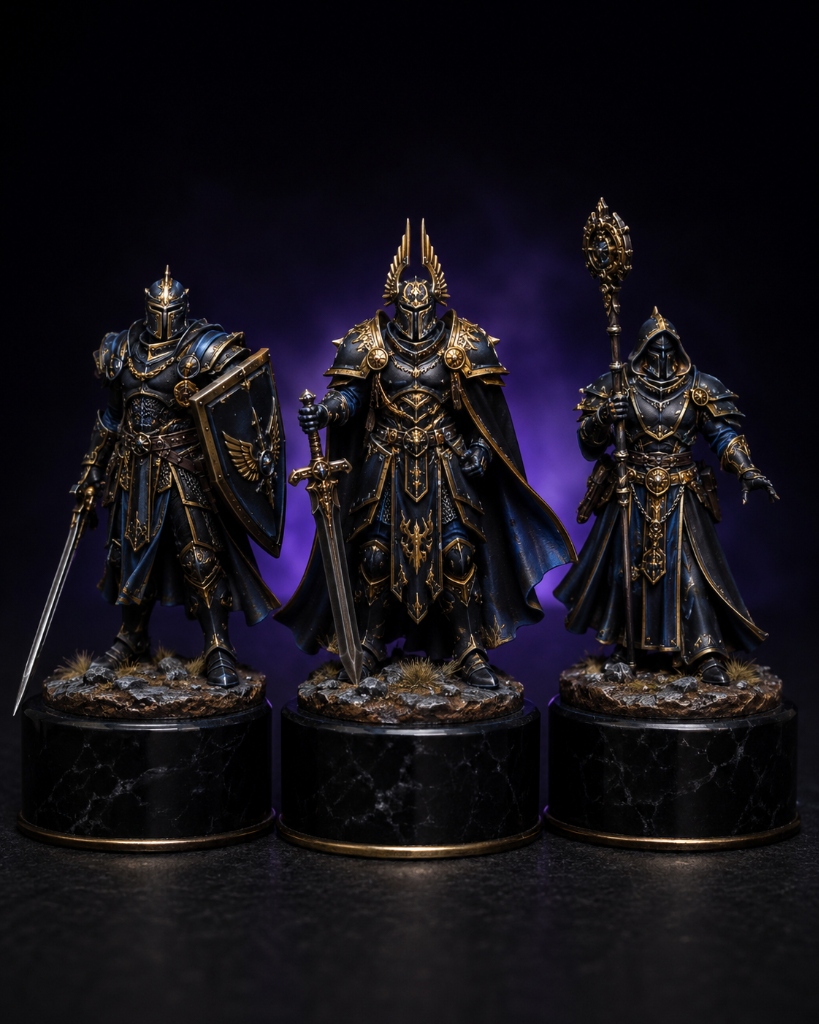
Whether you're staring down 60 Warhammer 40K Tyranid Gaunts or preparing a single centerpiece Primarch for competition display, choosing the right painting methodology dictates your hours at the desk and your final tabletop impact.
The Speedpainting Approach (Contrast / Slapchop)
Speedpainting relies on translucent high-pigment washes (such as Citadel Contrast, Vallejo Xpress Color, or Army Painter Speedpaint 2.0) applied over a zenithal pre-shaded undercoat.
- Pros: Shades recesses, colors midtones, and leaves raised edges in a single brush pass. Ideal for horde armies.
- Cons: "Coffee staining" on large flat panels (like Space Marine tank armor) and less control over zenithal light angles.
The Volumetric Glazing Approach
Traditional volumetric layering builds smooth light transitions manually from deep shadow to extreme highlight using multiple thin glazes.
- Pros: Flawless gradients, absolute control over light direction, rich velvet finishes that win painting competitions.
- Cons: Demands higher time commitment per miniature.
Hybrid Workflow with MiniPaint AI
The modern hobbyist uses both! In MiniPaint AI, you can tag each stage of your project:
- Use Speedpaint / Contrast recipes for cloth, organic skin, and textured fur.
- Switch to Volumetric Palette chains for sharp shoulder armor, glowing plasma coils, and hero faces.
- Track your desk timer and earned badges in Workshop Analytics.
Supercharge Your Painting Sessions
Track stages, manage recipes, and master your backlog with MiniPaint AI.
Download on the App Store